Community / July 2026
Two joysticks, one maze, and a room full of players
I built a two-player Android TV maze game and arcade controllers for UGSO Varaždin. The best part is that people keep playing it together.
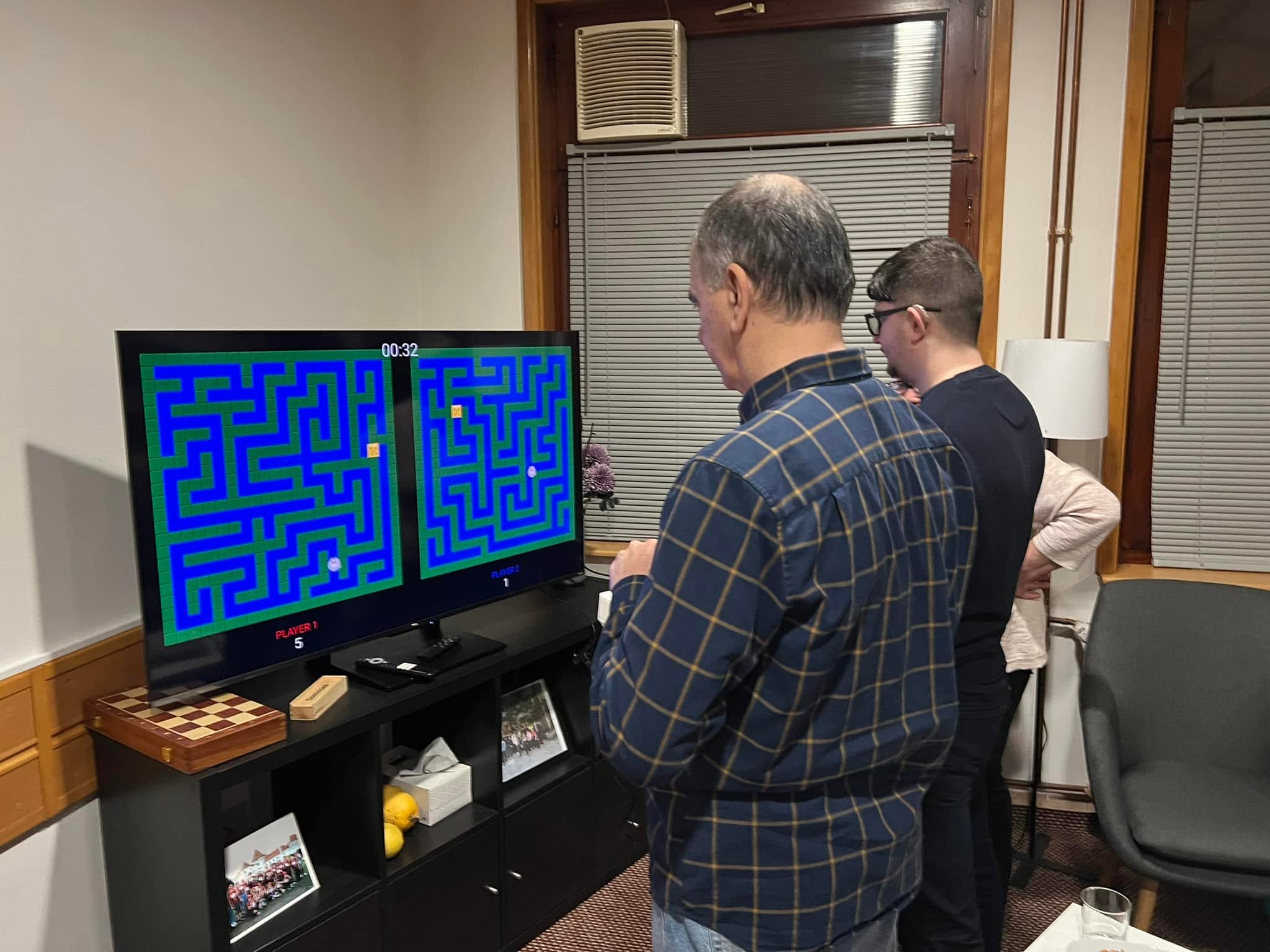
At UGSO Varaždin's space on Anina 38, two people stand in front of a TV, each holding an arcade joystick. On the screen, they guide little mice through separate mazes toward the cheese. A round is over in about 30 seconds. Then someone asks for another.
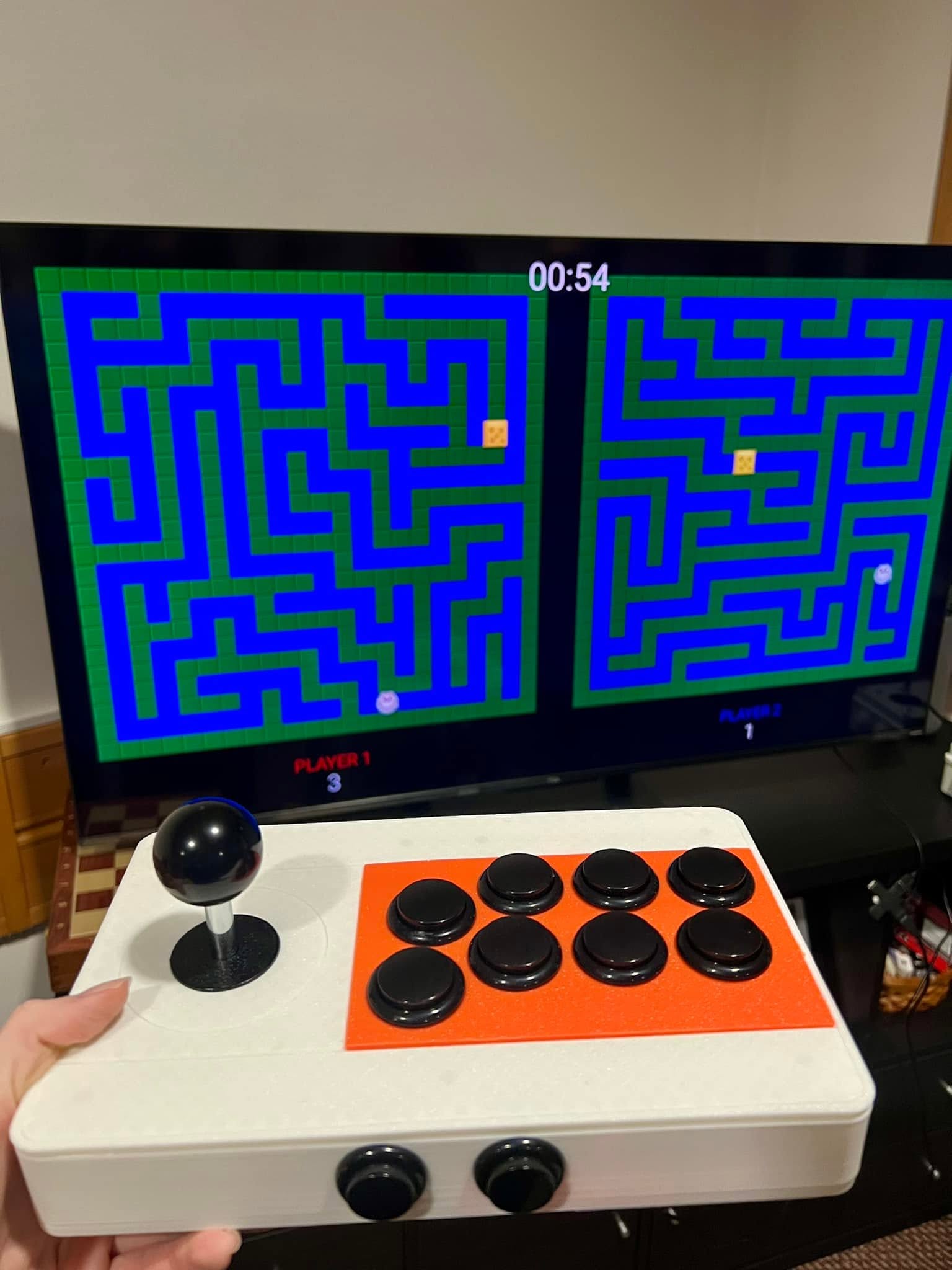
I made the Android TV game and assembled two physical controllers with old-school Sanwa arcade joysticks. I 3D-printed one of the controller boxes. The game has no official name; around the room, the point is simply to get the mouse to the cheese before your opponent does.
Why make a game for this room?
UGSO is an association for deafblind and deaf people, and its premises are also a place to meet, play, and spend time together. I wanted to add something people could pick up and enjoy as a pair, including older members who did not grow up with a game controller in their hands. A joystick is direct: move the stick and the mouse moves. The TV lets other people follow the round and join the conversation.
The mazes have adjustable complexity. A new player can start with an easier route; someone who has learned the game can ask for a harder one. Winning earns points, so a short round can become a rematch, a running score, or a tournament. The rounds are short enough that waiting players get a turn soon.
Build for the people using it
The game also has a high-contrast mode for players with very poor sight. Deafblindness does not mean everyone sees the same way, and a visual game will not work for every member. But giving people a clearer display and a choice of difficulty makes this particular game usable for more of the people in the room.
The physical controls matter just as much as the screen. Each player has their own box, with a substantial arcade stick and buttons they can find and operate without trying to use a tiny remote. I assembled both controllers, including the wiring and their connection to the Android game. One box was 3D-printed. They are made for repeated use in UGSO's shared space, not just for a demonstration.
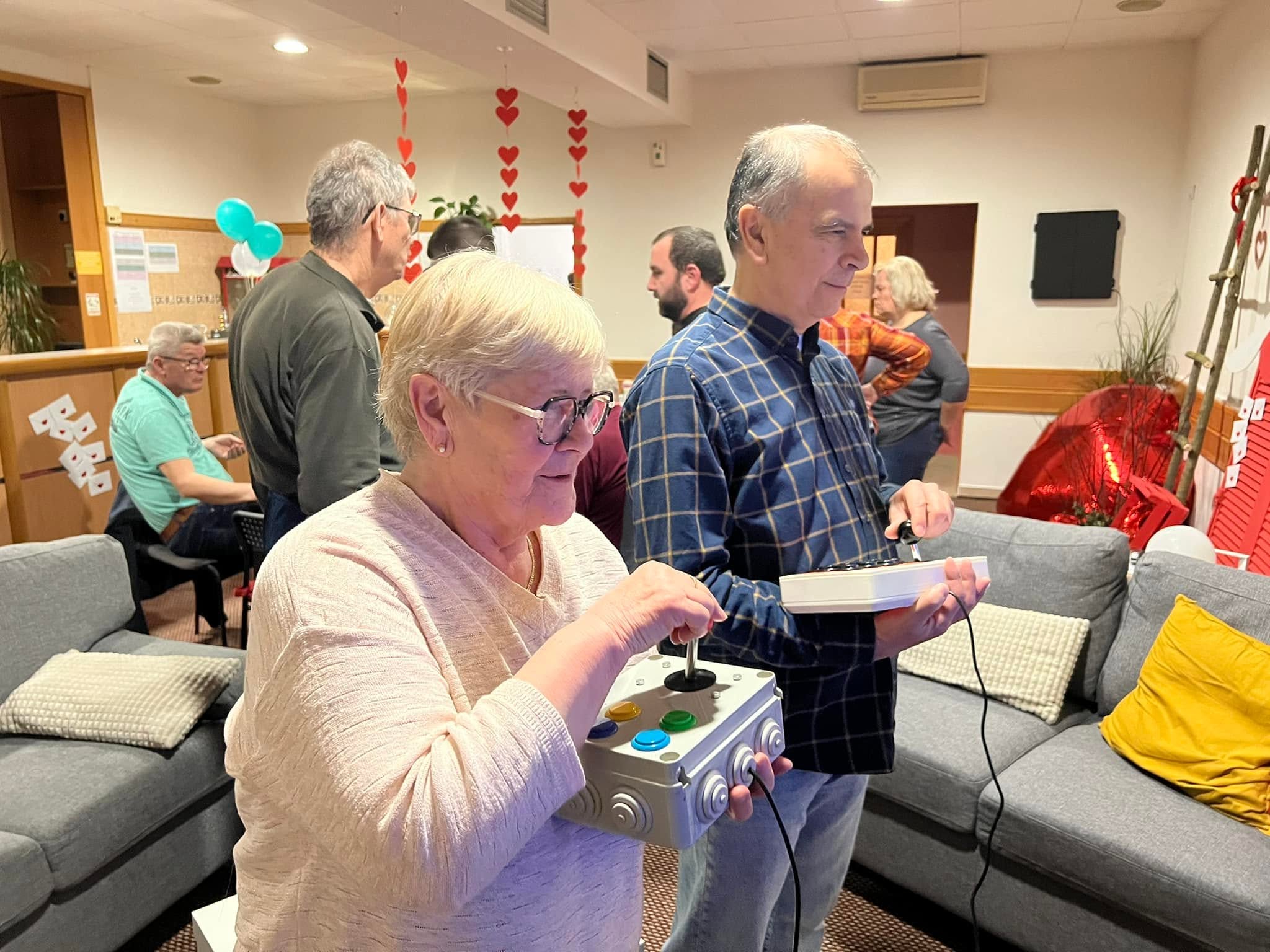
UGSO introduced the game in March 2026, thanking the volunteers who took part in its development. I built the game and controllers, but it was made in that volunteer setting, for the association's members. What matters to me now is what happened after the introduction: people still play it regularly. They talk while they play, challenge each other, and arrange tournaments. The game has become one more reason to gather at Anina 38.
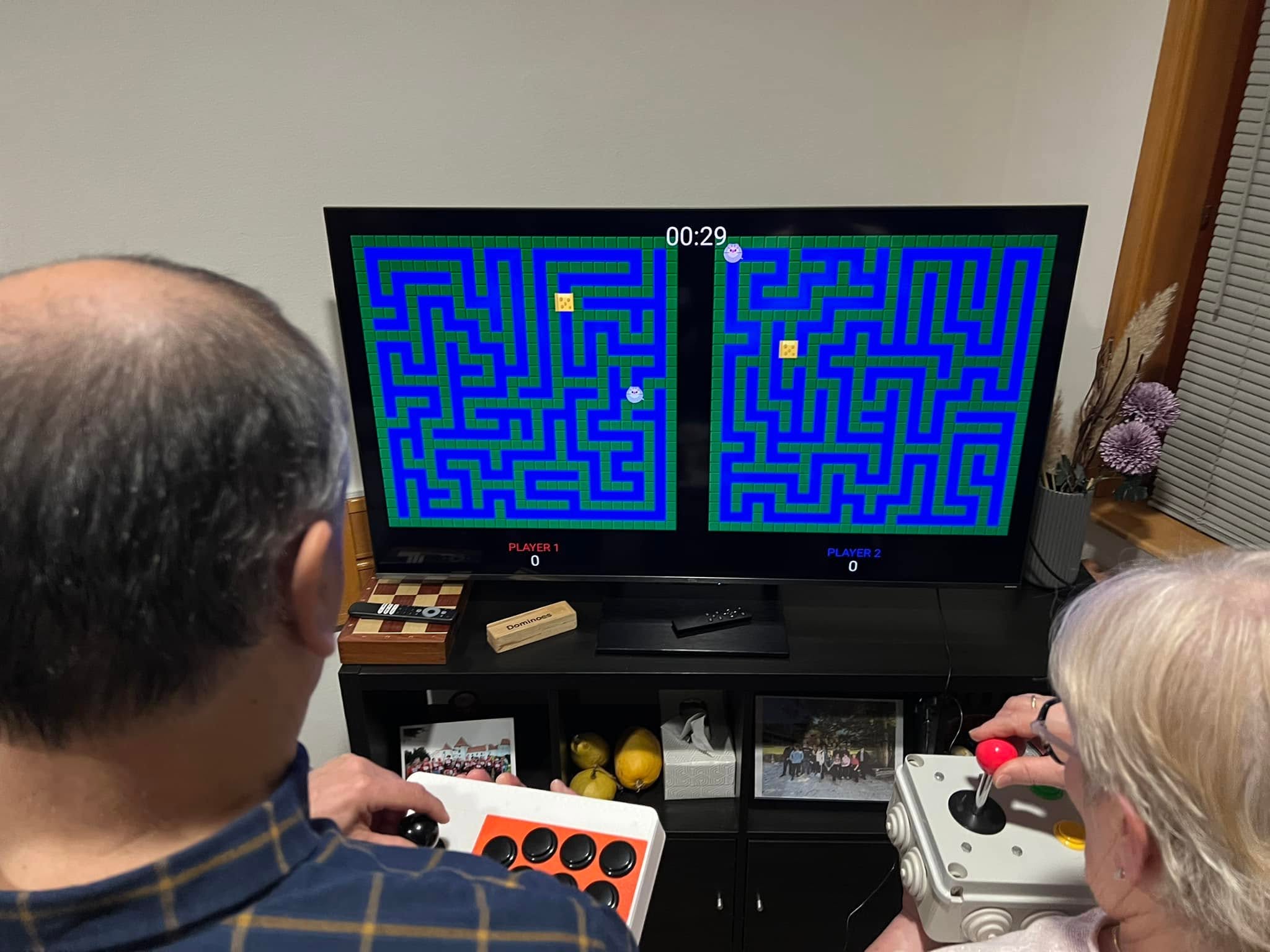
This is a small project: a TV game, two controllers, a mouse, and some cheese. Its success is not the code running once. It is seeing the controllers picked up again when I am not there to explain them.
For more on the people and work around this project, read what UGSO Varaždin does between its public events.